

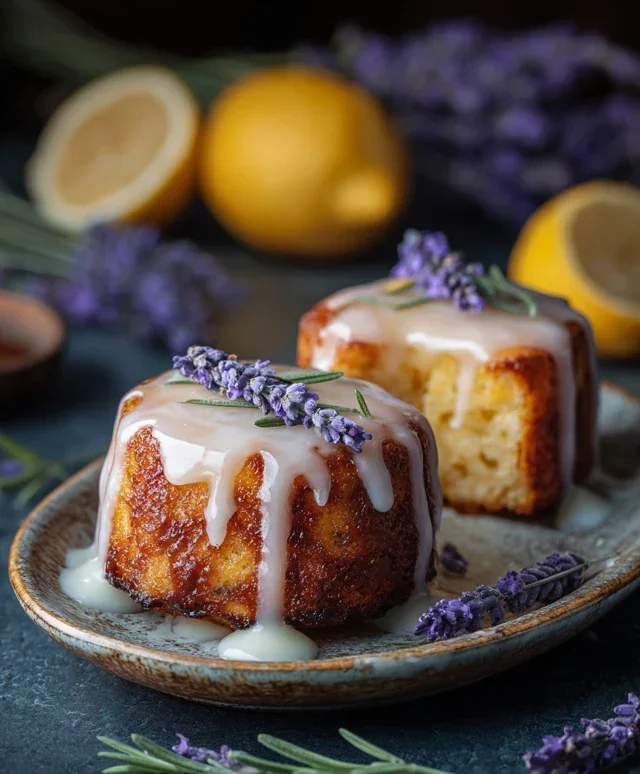
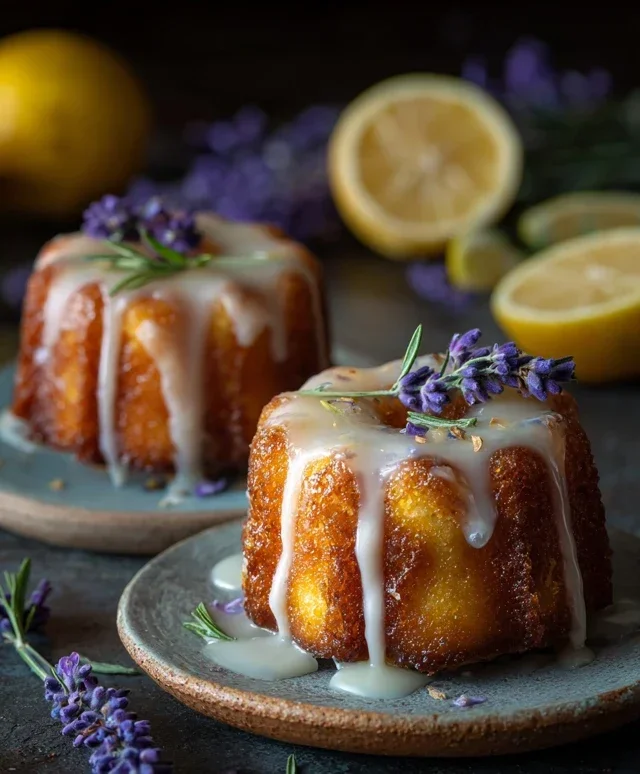
Mini Lemon Cakes With Lavender Glaze are a delightful invitation to spring, no matter the season. There’s something undeniably special about these tiny treasures. Imagin extracte biting into a moist, tender cake bursting with bright, zesty lemon flavor, then being met with the subtle, aromatic whisper of lavender in a sweet, creamy glaze. It’s a flavor combination that feels both sophisticated and wonderfully comforting, evoking sun-drenched gardens and peaceful moments. People adore these Mini Lemon Cakes With Lavender Glaze because they offer a perfect balance of sweet and tart, with that unexpected floral note that elevates them beyond the ordinary. They’re ideal for afternoon tea, a special dessert for guests, or simply a beautiful way to treat yourself. Get ready to fall in love with the charm of these delightful mini cakes!

Mini Lemon Cakes With Lavender Glaze
There’s something truly magical about miniature desserts. They feel so delicate, so special, like little edible jewels. And when you combine the bright, zesty punch of lemon with the subtle, floral whisper of lavender, you get a treat that’s both comforting and sophisticated. These Mini Lemon Cakes with Lavender Glaze are perfect for afternoon tea, a special brunch, or just as a delightful pick-me-up. The cakes themselves are incredibly moist and tender, infused with the unmistakable sunshine of fresh lemon. The glaze, a beautiful pnon-alcoholic ale purple, offers a fragrant counterpoint that elevates the entire experience. Trust me, one bite and you’ll be hooked.
Ingredients:
Preparing the Lemon Cakes
The foundation of any great mini cake is a perfectly balanced batter. We’re aiming for moistness, a tender crum extractb, and a bright lemon flavor that isn’t overpowering.
1. Preheat your oven and prepare your mini muffin tins. It’s crucial to have everything ready before you start mixing your batter. Preheat your oven to 350°F (175°C). Generously grease and flour your mini muffin tins. You can also use mini paper liners if you prefer, but I find greasing and flouring often gives a better crust on these little cakes. If using a non-stick tin, a good spray of baking spray or a brush of melted butter followed by a dusting of flour should suffice. If you don’t have mini muffin tins, you can also use a mini cake pan or even form small mounds on a baking sheet, though they won’t be as uniform.
2. Combine the dry ingredients. In a medium bowl, whisk together the all-purpose flour, kosher salt, and baking soda. Whisking these ingredients together ensures that the leavening agents and salt are evenly distributed throughout the flour, which will lead to a more consistent rise and texture in your cakes. Make sure there are no clumps. Set this aside.
3. Cream the butter and sugars, then add the lemon zest. In a large bowl, beat the softened unsalted butter with the granulated sugar and packed light brown sugar until light and fluffy. This process, known as creaming, incorporates air into the butter and sugar mixture, which contributes to the cake’s tender texture and helps it rise. Next, add the grated lemon zest. Zest the lemons before juicing them – it’s much easier! I like to use a microplane for this, as it creates fine zest that disperses beautifully through the batter, releasing maximum lemon flavor without any bitter pith. Beat until fragrant.
4. Incorporate the wet ingredients. Add the large eggs, one at a time, beating well after each addition. This ensures that each egg is fully emulsified into the butter and sugar mixture, creating a stable base for the batter. Next, add the sour cream, 1/4 cup of whole milk, and the vanilla extract. Beat until everything is just combined. Don’t overmix at this stage; we want to avoid developing the gluten in the flour too much. Sour cream adds richness and moisture, while room temperature ingredients blend more smoothly.
5. Combine wet and dry ingredients, then fill your tins. Gradually add the dry ingredients to the wet ingredients, mixing on low speed until just combined. Be careful not to overmix. A few small lumps are perfectly fine. Once the batter is smooth, gently fold in the remaining 1/4 cup of whole milk. This helps to loosen the batter slightly and ensure it’s the perfect consistency for filling your mini muffin tins. Divide the batter evenly among the prepared mini muffin cups, filling each about two-thirds full. This allows room for the cakes to rise without overflowing.
Bake for 12-15 minutes, or until a toothpick inserted into the center of a cake comes out clean. Let the cakes cool in the tins for a few minutes before carefully transferring them to a wire rack to cool completely. It’s important they are fully cool before glazing, otherwise, the glaze will melt off.
Crafting the Lavender Glaze
This glaze is simple but delivers a delightful floral aroma and subtle flavor that complements the lemon perfectly.
1. Infuse the milk with lavender. In a small saucepan, gently warm the remaining 1/4 cup of whole milk with the culinary lavender. Heat it just enough to be warm to the touch, not boiling. The goal here is to infuse the milk with the lavender’s essence. Let it steep for about 10-15 minutes off the heat. Strain the milk through a fine-mesh sieve to remove all the lavender buds, pressing gently to extract as much flavor as possible. Discard the lavender.
2. Make the glaze. In a medium bowl, whisk together the powdered sugar and the 1/4 tsp. kosher salt. Add the lavender-infused milk, starting with a little less than you think you’ll need. Whisk until smooth and lump-free. Gradually add more milk, a teaspoon at a time, until you reach your desired drizzling consistency. You want a glaze that is thick enough to coat the back of a spoon but still thin enough to drizzle easily. If it’s too thick, add more milk; if it’s too thin, add a bit more powdered sugar.
Glazing and Serving
Once your mini lemon cakes have cooled completely, it’s time for the final, beautiful touch.
Drizzle the lavender glaze generously over the cooled mini cakes. You can use a spoon to artfully drizzle, or for more control, place the glaze in a piping bag with a small tip (or a Ziploc bag with a tiny corner snipped off). Let the glaze set for about 15-20 minutes before serving. These mini cakes are best enjoyed the same day they are made, but can be stored in an airtight container at room temperature for up to two days. Enjoy the delicate dance of lemon and lavender in every delightful bite!
Conclusion:
I hope you’ve enjoyed learning how to create these delightful Mini Lemon Cakes With Lavender Glaze! These little treasures are perfect for a multitude of occasions, from a sophisticated afternoon tea to a bright and cheerful dessert. Their delicate citrus flavor is beautifully complemented by the subtle floral notes of the lavender glaze, creating a truly unique and memorable taste experience. The small, individual portions make them incredibly easy to serve and share, and their pretty appearance will undoubtedly impress your guests.
For serving, consider pairing them with a light dusting of powdered sugar, a dollop of whipped cream, or even a few fresh berries for an extra burst of color and flavor. If you’re feeling adventurous, you can also experiment with different extracts in the cake batter – a hint of vanilla or even a touch of almond extract can add another layer of complexity. Don’t be afraid to adjust the amount of lavender in the glaze to your personal preference; start with a little and add more until you achieve the perfect floral aroma and taste. I truly encourage you to give these Mini Lemon Cakes With Lavender Glaze a try. They are surprisingly simple to make and offer a wonderful reward for your effort!
Frequently Asked Questions:
Can I make these cakes ahead of time?
Absolutely! You can bake the mini cakes up to two days in advance and store them in an airtight container at room temperature. It’s best to glaze them closer to serving time for the freshest flavor and appearance, but the glazed cakes will still be delicious the next day.
What if I don’t have culinary lavender? Can I substitute something else?
While culinary lavender provides a unique floral note, you can certainly experiment. A small amount of finely grated lemon zest in the glaze can add more citrus punch. Alternatively, a drop of high-quality vanilla extract or even a tiny pinch of rosewater can offer a different, yet still lovely, aromatic twist.
Mini Lemon Cakes With Lavender Glaze
Delicate mini lemon cakes infused with bright citrus and topped with a fragrant lavender glaze.
Ingredients
-
1 1/3 cups all-purpose flour
-
1/2 tsp. kosher salt
-
1/8 tsp. baking soda
-
1/2 cup unsalted butter, softened
-
2/3 cup granulated sugar
-
1/3 cup packed light brown sugar
-
1 Tbsp. grated lemon zest
-
2 large eggs, at room temperature
-
1/4 cup sour cream, at room temperature
-
1/4 cup whole milk
-
1 tsp. vanilla extract
-
1/4 cup whole milk
-
1/2 tsp. culinary lavender
-
1 1/2 cups powdered sugar
-
1/4 tsp. kosher salt
Instructions
-
Step 1
Preheat oven to 350°F (175°C). Grease and flour mini muffin tins. -
Step 2
In a medium bowl, whisk together flour, 1/2 tsp. kosher salt, and baking soda. -
Step 3
In a large bowl, cream together softened butter, granulated sugar, and brown sugar until light and fluffy. Beat in lemon zest. -
Step 4
Add eggs one at a time, beating well after each addition. Stir in vanilla extract. -
Step 5
Alternately add the dry ingredients and the sour cream and 1/4 cup milk mixture to the butter mixture, beginning and ending with the dry ingredients. Mix until just combined. -
Step 6
Spoon batter into prepared mini muffin cups, filling about two-thirds full. Bake for 20-25 minutes, or until a toothpick inserted into the center comes out clean. -
Step 7
Let cakes cool in the tins for a few minutes before transferring to a wire rack to cool completely. -
Step 8
To make the glaze, whisk together 1/4 cup milk, culinary lavender, powdered sugar, and 1/4 tsp. kosher salt until smooth. Add more milk if needed for desired consistency. -
Step 9
Drizzle the lavender glaze over the cooled mini cakes.
Important Information
Nutrition Facts (Per Serving)
It is important to consider this information as approximate and not to use it as definitive health advice.
Allergy Information
Please check ingredients for potential allergens and consult a health professional if in doubt.

Leave a Comment